
 Canada
 USA
USA Japan
Japan
Does Gon Die in HxH? Complete Analysis of Gon’s Fate After the Chimera Ant Arc

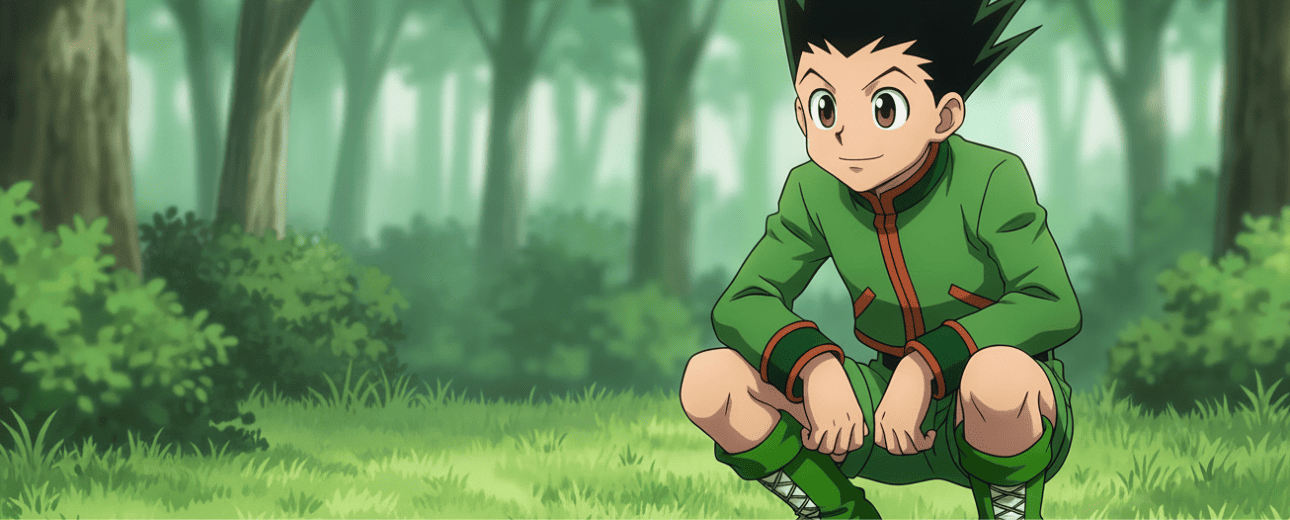
The question “Does Gon die in HxH?” has haunted the Hunter x Hunter fanbase for years, with passionate debates erupting across forums, Reddit threads, and social media about whether our beloved protagonist actually perishes or simply experiences a transformation so profound that it resembles death itself. The truthful answer is complex and philosophically fascinating—Gon does not technically die in the traditional sense, but he experiences a fate arguably worse than death through the catastrophic consequences of his nen activation against Neferpitou, resulting in the complete destruction of his nen capacity and transformation into a non-nen user for potentially the rest of his life. His body survives, his consciousness remains intact, but the Gon we knew throughout the series—the ambitious, determined young hunter capable of achieving incredible things through sheer willpower and nen ability—ceases to exist, replaced by a version of himself fundamentally diminished and stripped of everything that made him special. Understanding what actually happens to Gon requires examining the Chimera Ant Arc in detail, exploring the narrative implications of his current state, analyzing whether his condition might reverse through future story developments, and confronting the philosophical question of whether existence without purpose or capability constitutes a form of death. This comprehensive guide explores every facet of Gon’s fate, separates canon truth from fan speculation, and examines what his current status means for the future of Hunter x Hunter’s narrative.
The Chimera Ant Arc: Understanding What Actually Happens to Gon
Before addressing whether Gon dies, understanding exactly what occurs during the final confrontation with Neferpitou is absolutely essential, as many fans remain confused about the actual chain of events and their consequences.
Gon’s Activation and Nen Explosion: The Point of No Return
Gon’s most devastating moment occurs when he finally confronts Neferpitou and releases all his accumulated nen in a single, catastrophic explosion that transforms his body into an adult form and generates enough destructive power to completely obliterate the Royal Guard. This activation represents the culmination of Gon’s character arc—his single-minded determination to achieve his goal, his willingness to sacrifice everything, and his inability to accept compromise finally manifest in the most extreme possible way. The “Adult Gon” transformation emerges not through natural aging or training but through forcing his nen to accelerate his physical development to adulthood artificially, burning years of his lifespan in an instant.
The process is genuinely horrifying to witness—Gon’s body visibly ages, his hair whitens completely, and his young face transforms into an adult visage as his nen violently rips through his body. This isn’t a clever technique or strategic power-up; it’s essentially self-destruction through nen—burning his life force to generate sufficient power for a single attack. The transformation is so violent and damaging that medical science initially has difficulty determining whether Gon is even alive, with Killua visiting his bedside and finding him in a comatose state that resembles death far more than sleep.
The destruction Gon inflicts is complete—Neferpitou is obliterated, the Royal Guard is defeated, and Gon achieves his singular objective of avenging Kite. However, this victory comes at the most catastrophic possible price. The nen explosion doesn’t just damage Gon’s body; it fundamentally severs his connection to nen itself, destroying whatever allows him to use nen in the first place. Where previously Gon possessed the ability to sense and manipulate nen, he now possesses nothing—no nen aura, no hatsu, no connection to the invisible energy that defines hunters and the world of Hunter x Hunter.
The Immediate Aftermath: Coma and Medical Crisis
After the explosion, Gon enters a comatose state lasting several weeks, during which his physical condition deteriorates significantly and his survival remains genuinely uncertain. Killua remains by his side almost constantly, watching his best friend hover between life and death, unable to do anything but wait and hope. The anime portrays this period with genuine tragedy—Gon’s small body in a hospital bed, barely breathing, his life hanging in precarious balance.
During his comatose period, Gon undergoes multiple medical examinations revealing extensive internal damage throughout his body and nen system. His nen capacity has been fundamentally destroyed—not temporarily suppressed or damaged in a way that might heal, but shattered at a foundational level. Medical professionals are baffled by his condition, unable to explain how he’s survived this long or determine any pathway toward recovery. The prognosis is grim, and several doctors suggest that his survival despite his injuries borders on miraculous.
Killua’s perspective during this period reveals the emotional weight of Gon’s condition—his best friend, the person who defined much of Killua’s character arc and personal growth, may be permanently lost. Killua’s internal monologue expresses desperation and helplessness, feeling that he failed to protect Gon and contributed to this catastrophic outcome through his inability to stop Gon from pursuing Neferpitou alone. This emotional toll on Killua underscores just how serious Gon’s condition is—this isn’t temporary injury but potentially permanent devastation.
The Awakening and Partial Recovery
Eventually, Gon regains consciousness, though his recovery is far from complete or the triumphant awakening fans might have hoped for. When he finally wakes, Gon’s physical condition has improved sufficiently to survive, but his mental state is profoundly altered. He has no memory of the events immediately preceding his coma—his mind has essentially blocked out the trauma as psychological defense mechanism. More importantly, he possesses no memory of his objective to confront Neferpitou or his drive to avenge Kite. The psychological trauma of his experience has apparently wiped these motivations from his consciousness entirely.
This amnesia is perhaps more tragic than complete death would be—Gon survives physically but loses the central defining characteristic of his character: his determination and single-minded pursuit of his goals. He becomes, in a very real sense, a different person. The Gon who awakens is not the same Gon who entered the Chimera Ant Arc, diminished not just physically but psychologically as well.
Killua visits Gon during his recovery and witnesses firsthand the transformation. Gon doesn’t recognize or remember events, doesn’t possess the same intensity of personality, and appears almost like a stranger wearing Gon’s face. This realization devastates Killua more than Gon’s physical injuries, forcing him to confront that his best friend may never truly return to who he was before.
The Nen Destruction: What It Means for Gon’s Future
Understanding the permanent consequences of Gon’s nen destruction requires exploring what exactly was damaged and whether this damage might theoretically reverse in the future.
The Nature of Nen Destruction
Gon’s nen capacity isn’t simply damaged or temporarily suppressed—it’s fundamentally destroyed at a level that appears irreversible even by Hunter x Hunter’s standards. Normal nen users can recover from nen-based injuries through rest and healing. Users who accidentally damage their nen pathways can theoretically repair them through careful training and meditation. But Gon’s situation is categorically different. His nen circuit was obliterated from within by his own nen explosion—the damage is so complete and fundamental that standard recovery methods simply don’t apply.
The manga and anime suggest that Gon’s nen capacity is not just damaged but essentially erased—as though the potential for nen was burned away by his explosion, leaving nothing to rebuild. When Gon’s condition is examined by medical professionals and nen specialists, they universally conclude that his ability to use nen appears permanently lost. The specific mechanisms remain somewhat mysterious, suggesting that Hunter x Hunter’s universe possesses rules about nen destruction that even trained professionals struggle to understand fully.
This destruction creates a paradox in Hunter x Hunter’s universe—every character we’ve encountered, from the weakest to the strongest, possesses nen capacity to some degree, even if undeveloped. Gon becoming unable to use nen places him in a category unto himself, stripped of the fundamental power system that defines the world he inhabits. He becomes, in essence, powerless in a world where power determines success and survival.
Implications for Gon’s Identity and Future
The loss of nen capacity has profound implications for Gon’s identity and potential future in the series. Gon’s entire character arc has been defined by his growth as a hunter and nen user. His relationships, his goals, his self-perception—all were built around his identity as someone pursuing power and capability. Without nen, that entire foundation crumbles, leaving Gon to reconstruct his identity from essentially nothing.
This raises the question of whether Gon can ever truly return to being a hunter at all. Hunter’s licenses are earned through demonstrating capabilities that typically involve nen. The Hunter Examination doesn’t explicitly require nen use, but practical applicants must somehow prove their worth against nen-using examiners. Without nen, Gon’s path toward becoming a true hunter becomes impossibly difficult or outright blocked.
More importantly, Gon’s pursuit of Ging, his father, loses its narrative urgency and meaning without nen capability. Much of Gon’s motivation throughout the series has been becoming strong enough to find and confront Ging, to ask the questions that have defined his character since the beginning. Without power, without nen, without the capability to stand as an equal to his father, what becomes of this central motivation? The story seems to suggest that Gon’s pursuit of Ging ends here, leaving one of Hunter x Hunter’s central narrative threads unresolved.
Is Gon Actually Dead? Philosophical Examination
The question of whether Gon dies requires examining not just the medical facts of his survival but the philosophical and narrative meaning of his current existence.
The Case for Gon’s Functional Death
From a philosophical perspective, one could argue that Gon is effectively dead, even if his body continues functioning biologically. He has lost everything that made him uniquely Gon—his nen ability, his ambition, his determination, his drive toward his goals. He exists in a state resembling living death: physically present but psychologically hollow, surviving but without purpose or capability to engage with the world in meaningful ways.
The show’s portrayal of Gon after his awakening emphasizes this emptiness—he’s described as “going home,” but home to what? To what life? His family doesn’t understand what’s happened to him or how to help him recover from not just physical but existential damage. Gon’s mother figures—his aunt and grandmother—try to comfort him, but their comfort cannot restore what’s been lost. He exists in a state of limbo between life and death, neither fully alive in the way he was before nor deceased in the traditional sense.
Killua’s perspective reinforces this interpretation—his emotional devastation upon witnessing Gon’s transformation goes beyond simply grieving physical injury. He grieves the loss of his friend as he knew him, the loss of their adventures together, the loss of the future they might have shared. In emotional and psychological terms, his best friend has died, even if the body remains.
The Case for Gon’s Survival and Potential Recovery
Conversely, one could argue that Gon’s survival is precisely the point of his arc—that he doesn’t die but must learn to live with the consequences of his choices. Death would be narratively easy and provide closure. Surviving as a diminished version of himself, forced to reconstruct his life and identity, is far more challenging and potentially more meaningful as a narrative experience. Hunter x Hunter has never been about easy answers or simple resolutions—it’s about consequences, growth, and navigating impossible situations.
The manga’s continuation past this point (which advanced further than the anime’s Chimera Ant Arc adaptation) suggests that Gon’s story doesn’t end with his coma. While anime-only viewers remain uncertain about Gon’s future, manga readers know that he does recover sufficiently to leave the hospital and return to some semblance of normal life. This suggests that the narrative intends for Gon’s journey to continue, not terminate with his nen destruction.
Additionally, Hunter x Hunter has demonstrated repeatedly that characters can recover from seemingly permanent conditions through unconventional means. Killua’s father, Netero’s body, Hisoka’s apparent resurrection—the series has shown that what appears final or irreversible sometimes proves otherwise. The possibility exists that Gon might similarly discover or develop methods to restore his nen capacity or find new purpose beyond nen-based power.
The Narrative Truth: Gon’s Death as Transformation
The most accurate assessment combines both perspectives: Gon dies and doesn’t die, depending on how you define those terms. His previous self—the young boy pursuing his father, determined to become the world’s greatest hunter—effectively ends. That version of Gon cannot continue because the conditions that sustained that identity have been stripped away. In that sense, Gon dies.
However, Gon the physical person continues existing, and the narrative suggests the possibility of him reconstructing a new identity from the wreckage of the old one. This reconstructed Gon might be fundamentally different from the original, but the narrative possibility remains open. In that sense, Gon survives.
This ambiguous resolution reflects Hunter x Hunter’s thematic preoccupations with loss, transformation, and the consequences of choice. The series has never offered simple redemptions or complete reversals. Characters change, sometimes catastrophically, and must adapt or perish. Gon’s situation represents perhaps the ultimate expression of this theme—he survives but must become something new, defined not by power or capability but by how he chooses to rebuild.

Gon’s Current Status: What the Manga Reveals
For those who’ve continued reading the manga past the anime’s Chimera Ant Arc adaptation, Gon’s current status provides additional context about his condition and future prospects.
Recovery and Return to Society
The manga shows Gon recovering sufficiently from his comatose state to eventually leave the hospital and return to Whale Island, where he reconnects with his family and begins adjusting to his new reality. This recovery isn’t miraculous or complete—Gon remains physically fragile for a considerable time and psychologically altered—but it demonstrates that survival is possible and that some form of return to normal life is achievable.
Gon’s reunion with Killua becomes complicated by the fact that Killua must leave to fulfill other obligations (pursuing Alluka’s wishes regarding Nanika), and Gon must learn to exist independently rather than defined through his friendship with Killua. This separation forces Gon to construct identity beyond his relationships, which might be necessary for him to move forward psychologically.
The manga suggests that Gon gradually adapts to his new circumstances, though with considerable difficulty and lasting psychological damage. He’s no longer the optimistic, determined boy from early chapters, replaced by someone more contemplative, perhaps sadder, but potentially capable of finding meaning beyond power and ambition. Whether this represents genuine recovery or simply adaptation to permanent loss remains ambiguous.
The Possibility of Nen Restoration
The manga continues to leave open the possibility that Gon’s nen capacity might theoretically be restored through future developments or discoveries. No definitive statement establishes that his nen destruction is cosmically permanent or that restoration is absolutely impossible. This ambiguity maintains narrative tension and leaves the door open for future plot developments that might restore Gon to hunter status.
However, as of the manga’s current state, there’s been no concrete development toward nen restoration. The story has moved forward with Gon as a non-nen user, suggesting that his arc might be defined by learning to exist and find purpose without the power system that previously defined him.
The Ongoing Narrative Implications
Gon’s status as a former nen user creates interesting narrative possibilities for future Hunter x Hunter developments. His unique perspective as someone who possessed extraordinary nen capability and lost it completely might provide insights into nen’s nature that normally nen-using characters couldn’t access. His potential future reunion with Ging might carry different weight without the power competition dynamic that previously motivated their meeting.
The unresolved threads of Gon’s narrative—his journey to meet his father, his potential role in future arcs, his possible path toward nen restoration—remain genuine mysteries that the continuation of Hunter x Hunter might eventually explore.

Fan Theories and Speculation: Could Gon Recover His Nen?
The fanbase has developed numerous theories about whether and how Gon might recover his nen capacity, ranging from plausible to wildly speculative.
The Medical Recovery Theory
Some fans theorize that Gon’s nen destruction might eventually heal through advanced medical treatment or nen-based healing techniques not yet explored in the series. Specialists like Machi (a member of the Phantom Troupe with nen-based healing abilities) or Unknown nen users with restorative capabilities might theoretically repair Gon’s nen system. This theory relies on the assumption that nen damage, even catastrophic damage, follows medical principles that might eventually yield to treatment.
The primary counter-argument is that Gon’s nen destruction appears fundamentally different from normal nen damage—it seems to have erased his capacity entirely rather than simply harming his nen pathways. Medical healing might repair injury but cannot restore erased potential, creating a categorical distinction between Gon’s condition and conditions that medical intervention might address.
The Contract Theory
Some fans propose that Gon might make a Nen Contract or deal with an external entity to restore his nen capacity, similar to how characters have made binding nen agreements throughout the series. This theory relies on the established principle that nen contracts can impose nearly impossible conditions if the benefit is proportional, suggesting that powerful enough contracts might force reality to restore Gon’s nen in exchange for appropriate sacrifice.
This theory’s appeal derives from how thoroughly Hunter x Hunter has explored nen contracts as means of achieving impossible things, but it assumes that nen restoration represents the kind of goal that contracts can address, which remains unconfirmed.
The Reincarnation Theory
Some fans, particularly those engaging in more speculative theorizing, propose that Gon might undergo some form of spiritual rebirth or reincarnation that would restore him to previous capability. This theory stretches beyond established Hunter x Hunter lore but reflects the series’ willingness to introduce unexpected metaphysical concepts and possibilities.
The Purpose-Without-Power Theory
Many experienced fans propose that Gon’s narrative arc is specifically about learning to exist and find purpose without nen capacity, making nen restoration neither desirable nor necessary from a storytelling perspective. This theory suggests that Gon’s greatest growth will come from reconstructing his life and identity without the crutch of power, transforming from a character defined by capability into someone defined by character and resilience.
This theory aligns well with Hunter x Hunter’s thematic preoccupations with growth through hardship and the consequences of ambition, suggesting that Gon’s most important journey might actually begin after his nen destruction rather than ending with it.

Comparisons to Other Hunter x Hunter Characters: Gon’s Unique Situation
Examining how Gon’s fate compares to other characters who’ve suffered major setbacks or transformations provides context for understanding his condition.
Killua’s Situation: Power Without Purpose
Killua enters the series as an assassin with significant nen capacity but without genuine understanding of why he uses that power or what purpose it serves. His arc involves learning to choose his own path rather than following assassin training. By the Chimera Ant Arc’s end, Killua retains his nen capacity and physical capability but must reconstruct his purpose and identity, superficially similar to Gon’s challenge but fundamentally different in that he retains agency and capability.
Where Gon loses capability but retains consciousness, Killua retains capability but must reconstruct purpose, making their situations inverted but potentially equal in difficulty.
Netero’s Condition: Power at Catastrophic Cost
Netero’s situation parallels Gon’s in certain ways—he demonstrates willingness to destroy his own body for power, resulting in a state where he’s achieved extraordinary capability but at the cost of his physical integrity. However, Netero’s sacrifice results in greater power, whereas Gon’s sacrifice results in complete power loss, making their situations opposite in outcome despite similar willingness to sacrifice self.
Kurapika’s Situation: Curse and Sacrifice
Kurapika’s nen ability comes with a devastating curse that shortens his lifespan every time he uses it, forcing him to make constant choices about power versus survival. Like Gon, Kurapika sacrifices health and longevity for power, but where Kurapika’s sacrifice is calculated and ongoing, Gon’s is catastrophic and singular, creating a categorical difference in how their sacrifices function within their narratives.
What Gon’s Fate Means Thematically
Understanding the thematic significance of Gon’s fate reveals why this outcome matters so profoundly for Hunter x Hunter’s narrative and philosophical position.
The Consequences of Ambition
Gon’s destruction serves as Hunter x Hunter’s most extreme statement about the consequences of unbounded ambition and willingness to sacrifice everything. Throughout the series, characters have pursued goals with varying degrees of ruthlessness, but Gon’s willingness to literally burn his life away for a single objective represents the ultimate logical conclusion of ambition without restraint. His fate warns that pursuing power and capability without considering costs might result in irreversible catastrophe.
The Importance of Restraint and Wisdom
Against Gon’s catastrophic choice stands the counter-example of restraint—characters like Netero who pursue power but understand certain lines that shouldn’t be crossed, who possess enough wisdom to recognize when victory at any cost becomes pyrrhic. Gon’s fate suggests that true growth involves learning when not to pursue objectives, when to accept defeat, when to value survival over singular goals. His destruction represents the ultimate expression of failure in this regard.
Transformation and Loss as Core Narrative
Perhaps most fundamentally, Gon’s fate reflects Hunter x Hunter’s thematic concern with transformation through loss and the recognition that becoming someone new sometimes requires destroying who you were. This aligns with the series’ recurring pattern where characters change fundamentally through adversity, where growth involves sacrifice, where the cost of ambition must be genuinely paid rather than merely acknowledged.
Gon’s survival without nen capability represents perhaps the purest expression of this theme—he doesn’t die, but he ceases to be who he was, forced to construct new identity from what remains. This transformation is tragic, as genuine transformation often is in Hunter x Hunter, but it might ultimately prove more important to the narrative than if he had simply perished.

The Current State of Hunter x Hunter and Gon’s Future
As of this writing, Hunter x Hunter’s manga continues sporadically while the anime remains indefinitely on hiatus following the Chimera Ant Arc conclusion. The status of Gon’s future within the narrative remains uncertain.
Manga Continuation and Gon’s Limited Role
The manga has continued beyond the Chimera Ant Arc, exploring new characters and plot threads while Gon remains largely absent from major story developments. His arc appears to have concluded with his coma and recovery, with subsequent narrative focus shifting to characters like Killua and new protagonists. This suggests that while Gon survives, his central role in the narrative might have ended.
This absence from subsequent narrative development might indicate that Gon’s story reached its natural conclusion with his nen destruction, leaving him as a secondary character in the greater Hunter x Hunter narrative rather than a central protagonist as he was in earlier arcs.
Anime’s Indefinite Hiatus and Speculation
With the anime having completed the Chimera Ant Arc years ago and showing no signs of returning to produce new episodes, the anime-viewing audience remains frozen in time regarding Gon’s fate. For anime-only fans, Gon’s story ends with ambiguity and tragedy, with his recovery left to manga continuation that many fans never access or fully appreciate.
Speculation about potential anime revival continues among fans, with the possibility that future anime episodes might adapt further manga developments and provide clarity about Gon’s trajectory. However, years of hiatus suggest that anime revival might never occur or, if it does, might arrive at distant future date.
The Possibility of Closure
Whether Hunter x Hunter ultimately provides clear closure regarding Gon’s fate—whether his nen is restored, whether he finds new purpose, whether his story concludes finally or remains forever ambiguous—remains unknown as the manga continues its sporadic publication schedule. Mangaka Yoshihiro Togashi’s health struggles and irregular work pattern mean that completion of the narrative (and resolution of Gon’s fate) might remain years away or potentially never arrive.
Conclusion: Does Gon Die in HxH? The Final Answer
The answer to whether Gon dies in Hunter x Hunter is both yes and no, depending on how you define death and which aspects of Gon’s existence you prioritize. From a biological perspective, Gon survives his coma and continues living. From a philosophical perspective, the Gon who emerged from the Chimera Ant Arc—the determined, ambitious young hunter pursuing his father and power—ceases to exist, replaced by someone fundamentally diminished and transformed.
Gon’s fate represents perhaps Hunter x Hunter’s most profound exploration of consequences—not the temporary wounds that characters heal from, but the permanent transformations that fundamentally alter who they are. He paid the ultimate price for his ambition, not through death but through the destruction of everything that made him special and capable. In many ways, this outcome is more tragic than death would be, as it forces Gon to continue existing without the framework that previously sustained his identity and purpose.
Whether Gon eventually recovers his nen, finds new purpose, or remains permanently transformed remains unknown, but one thing is certain: the boy we followed from the beginning of Hunter x Hunter’s narrative will never fully return. That version of Gon died when he activated his nen against Neferpitou, and whatever follows represents something new—a continuation, perhaps, but fundamentally different from what came before. This ambiguous, tragic resolution reflects Hunter x Hunter’s refusal to offer simple answers or easy redemptions, insisting instead that consequences are real, that choices matter, and that becoming someone new sometimes requires destroying who you were.
External Resources :
- Hunter x Hunter Fandom Wiki: https://hunterxhunter.fandom.com/wiki/Gon_Freecss
- MyAnimeList Hunter x Hunter: https://myanimelist.net/anime/11061/Hunter_x_Hunter_2011
- Reddit Hunter x Hunter Community: https://www.reddit.com/r/HunterXHunter/
- YouTube Hunter x Hunter Discussions: https://www.youtube.com/results?search_query=hunter+x+hunter+gon+nen+destroyed