
 Canada
 USA
USA Japan
Japan
The Philosophy Behind Hunter x Hunter: Free Will, Power, and Human Nature

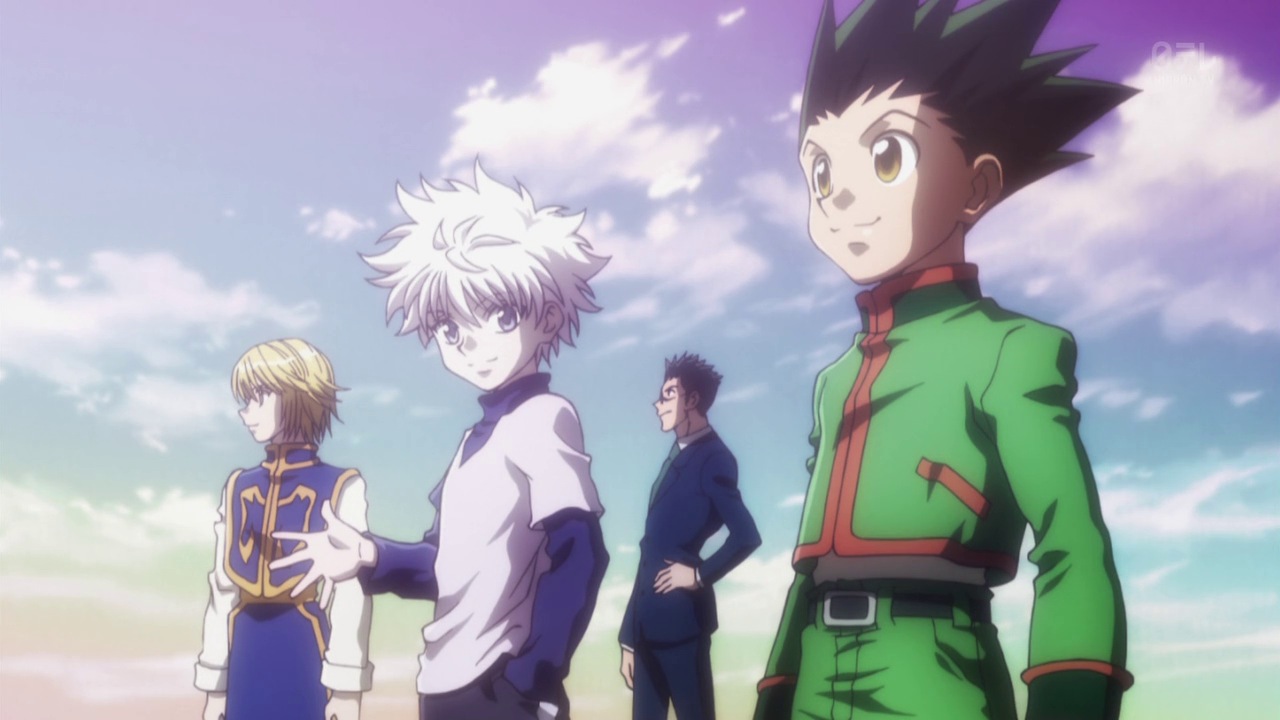
At first glance, Hunter x Hunter might seem like a standard shonen anime — adventure, friendship, training arcs, flashy battles. But dig a little deeper, and you’ll uncover a story that’s far more layered, complex, and introspective than most. Anyone who has actually sat through the Chimera Ant arc, or watched Kurapika’s revenge slowly curdle into something darker, knows this isn’t a series content with surface-level thrills.
Yoshihiro Togashi doesn’t just write about characters fighting monsters — he writes about what drives them, what breaks them, and what it truly means to be human in a world without easy answers. Here’s how Hunter x Hunter explores some of the deepest philosophical questions through its storytelling.
What Is Power Without Purpose?
From the very beginning, Hunter x Hunter raises the question: what does it mean to be strong? But unlike many other series, it doesn’t glorify strength for its own sake.
Gon seeks strength to find his father — but as the series progresses, that goal becomes twisted. His pursuit of power ultimately leads to self-destruction. Killua is incredibly powerful but feels powerless because he lacks purpose and confidence due to years of manipulation and trauma. Meruem, the Chimera Ant King, is born with absolute power. And yet, he ends up seeking meaning through a board game and a fragile human girl.
Hunter x Hunter suggests that strength is not the goal — it’s a tool. What matters is how and why it’s used.
Gon’s Power as a Cautionary Tale, Not a Reward
What makes Gon’s arc so unsettling on a rewatch is how the manga frames his transformation during the fight against Neferpitou. Rather than treating his sudden surge of adult-level strength as a triumphant power-up — the kind shonen fans are conditioned to cheer for — Togashi frames it as a tragedy. Gon enters a Nen covenant that trades away his future potential entirely, and the visual horror of his transformation makes it clear this isn’t strength worth celebrating. It’s one of the rare moments in the genre where “getting stronger” is depicted as something closer to self-harm than self-actualization.
Meruem and the Limits of Absolute Strength
Meruem’s arc inverts the question entirely. Here is a being born already at the apex of physical power, with no need to train, struggle, or earn anything. Yet his story isn’t about what he can destroy — it’s about what that power fails to give him. It’s only through losing repeatedly to a blind girl at a board game that Meruem starts to understand value, humility, and connection — concepts his raw strength could never provide on its own. This contrast between Gon’s destructive pursuit of power and Meruem’s discovery of meaning despite already having power is one of the most quietly brilliant parallels in the entire series.

Free Will vs. Destiny
Many characters in Hunter x Hunter struggle with control — over their choices, their bodies, their futures.
Killua’s story is all about reclaiming his free will from his assassin family’s conditioning. Nen abilities often reflect internal desires, fears, or limitations — self-imposed rules that become reality. It’s almost a metaphor for how belief shapes action. The Chimera Ants are born with instincts to dominate, but several begin to reject those instincts and form their own identities.
Togashi shows us that freedom isn’t given — it’s earned, and often painfully. The characters who grow are the ones who fight for agency in a world that constantly tries to define them.
Killua’s Conditioning and the Long Road to Choosing Himself
It’s worth remembering just how literal Killua’s lack of free will once was. His brother Illumi planted a psychological block — and at points, even physical conditioning — designed to suppress fear and override his instincts in favor of his family’s wishes. Watching Killua gradually unlearn this programming, chapter by chapter, is less a typical “character growth” arc and more a slow act of reclaiming ownership over his own mind. That distinction matters: Killua isn’t just getting braver, he’s dismantling something that was deliberately built to make him incapable of choosing for himself.
Ging Freecss and Freedom as a Parenting Philosophy
Few characters embody the series’ obsession with free will more than Ging Freecss, Gon’s absent father. According to the Hunter x Hunter wiki, Ging is widely viewed by other characters as a poor father due to his carefree, eccentric nature, yet his choice to stay away from Gon was rooted in a belief that real growth has to be self-directed rather than handed down, as detailed on the Hunterpedia page for Ging Freecss. CBR’s analysis of Ging’s parenting points out that his real failure wasn’t necessarily leaving Gon as a toddler in the care of his cousin Mito, but rather his inconsistent reappearances afterward, which left Gon chasing a relationship that Ging never fully offered, according to CBR’s breakdown of Ging’s greatest flaw as a father. Whether or not you agree with his methods, Ging’s entire philosophy is built on the idea that destiny handed to you by someone else isn’t really yours at all.
Nen as Self-Imposed Destiny
One detail that rewards close readers is how Nen itself mirrors this theme mechanically. A character’s abilities are shaped by their personality, their fears, and the rules they choose to bind themselves to — meaning every Hunter is, quite literally, defining their own destiny through belief and discipline rather than being assigned a fixed power level. This is part of why Nen feels less like a magic system and more like a psychological framework dressed up as one.
The Ambiguity of Good and Evil
Morality in Hunter x Hunter is anything but black and white. Togashi goes out of his way to make sure we understand that the “good guys” aren’t always just or kind, and the “bad guys” aren’t always cruel or wrong.
Take the Phantom Troupe: murderers and thieves, yes — but also a family with a code, bonded by loyalty and shared history. Or the Chimera Ants: brutal and violent, but some evolve into deeply thoughtful beings capable of love, sacrifice, and doubt. Even Gon, our bright-eyed protagonist, descends into terrifying moral grayness by the time of the Chimera Ant Arc. Hunter x Hunter forces you to constantly rethink your assumptions about who deserves sympathy, trust, or redemption.
The Phantom Troupe as Proof That Villains Can Love
What makes the Troupe such a compelling case study in moral ambiguity isn’t just their crimes — it’s how genuinely they grieve and care for each other. When Uvogin is killed, the group’s reaction isn’t calculated or distant; it’s raw grief from people who consider each other family. That detail alone complicates any attempt to file the Troupe away as simple antagonists, and it’s part of why so many fans find themselves oddly sympathetic to a group responsible for genocide.
Netero’s Final Choice and the Cost of “Justice”
The supposed good guys don’t escape this moral scrutiny either. Chairman Netero, the embodiment of Hunter Association authority and discipline, ultimately defeats Meruem not through skill or restraint, but by detonating a nuclear device surgically implanted inside his own body. It’s a chilling reminder that the story never lets its heroic figures claim the moral high ground for long — even “winning” against a villain comes at the cost of using the same scale of destruction the story otherwise condemns.
What Does It Mean to Be Human?
This question takes center stage in the Chimera Ant Arc, but it’s a recurring theme throughout the series. Is being human defined by birth, behavior, emotion, or choice?
Meruem is born a monster, but dies with more humanity than many of the people who sought to destroy him. Komugi, blind and physically weak, represents humility, grace, and strength of spirit. Ging, one of the most accomplished Hunters, is deeply flawed and emotionally distant — a reminder that genius doesn’t always come with goodness.
The show seems to say: being human isn’t about species — it’s about consciousness, compassion, and the ability to change.
Komugi as the Series’ Quietest Philosophical Statement
It’s easy to overlook Komugi in a story filled with nuclear-level Nen battles and ancient evolutionary threats, but she might be the most important character in the entire arc’s philosophical argument. She has no power, no political weight, and no idea of the war happening around her — and yet her simple presence is what humanizes the single most powerful being in the story. Togashi seems to be arguing that humanity isn’t a trait reserved for the strong or the intelligent; it can just as easily be carried by someone whose only “power” is sincerity and devotion to something she loves.
Royal Guards Who Inherited More Than Just Strength
The transformation of the Chimera Ants’ Royal Guards adds another layer to this theme. Several of the strongest ants in Meruem’s court retain fragments of the humans they devoured — memories, habits, even loyalty — raising the uncomfortable possibility that humanity isn’t fully erased even when the body that carried it is gone. This detail reinforces the series’ broader argument: humanity is less about biological continuity and more about the emotional and ethical residue a person leaves behind, even after death.

The Burden of Knowledge
The more characters learn about the world, the more they struggle with it.
Kurapika learns the truth about the Phantom Troupe and sacrifices his peace of mind for revenge. Gon learns that idealism can’t always survive reality — and he pays dearly for that knowledge. Even Leorio, who seems straightforward, chooses a life of medicine to heal people in a world that constantly breaks them.
Togashi shows that knowledge isn’t always a gift — it can be a curse, especially when it challenges deeply held beliefs or forces painful decisions.
Kurapika’s Revenge as Knowledge Turned Into a Cage
Kurapika’s transformation following the massacre of the Kurta Clan is one of the clearest illustrations of this theme in the entire series. The more he learns about the Phantom Troupe — their habits, their weaknesses, their internal hierarchy — the more his entire identity narrows around a single goal. His knowledge doesn’t free him; it traps him inside a mission that consumes every other part of who he could have been, a tension that has only deepened as the manga’s ongoing Succession Contest arc pushes him further into political and moral compromise.
Leorio’s Quiet Counter-Argument
Leorio rarely gets the spotlight that Gon, Killua, or Kurapika receive, but his decision to pursue medicine carries real philosophical weight precisely because it’s the opposite reaction to painful knowledge. Where Kurapika’s knowledge calcifies into vengeance, Leorio’s awareness of the world’s cruelty pushes him toward healing instead. Placing these two reactions side by side — revenge versus repair — is one of the more understated ways Togashi explores what people actually do with painful truths once they have them.
Final Thoughts
What sets Hunter x Hunter apart isn’t just its intricate power system, unpredictable story arcs, or incredible character writing — it’s the philosophy embedded into every decision. Togashi asks real questions: about life, choice, morality, and meaning — and he doesn’t always give you answers.
Instead, he hands you a mirror and says, “You figure it out.”
That’s why Hunter x Hunter resonates so deeply with fans around the world. It’s not just a story about Hunters — it’s a story about what it means to live deliberately, with all the chaos and beauty that comes with it. Few shonen series trust their audience enough to leave this much unresolved, and that trust is exactly why fans keep returning to these questions, chapter after chapter, hiatus after hiatus.