
 Canada
 USA
USA Japan
Japan

The Hidden Themes in Hunter x Hunter: What Makes It So Deep?

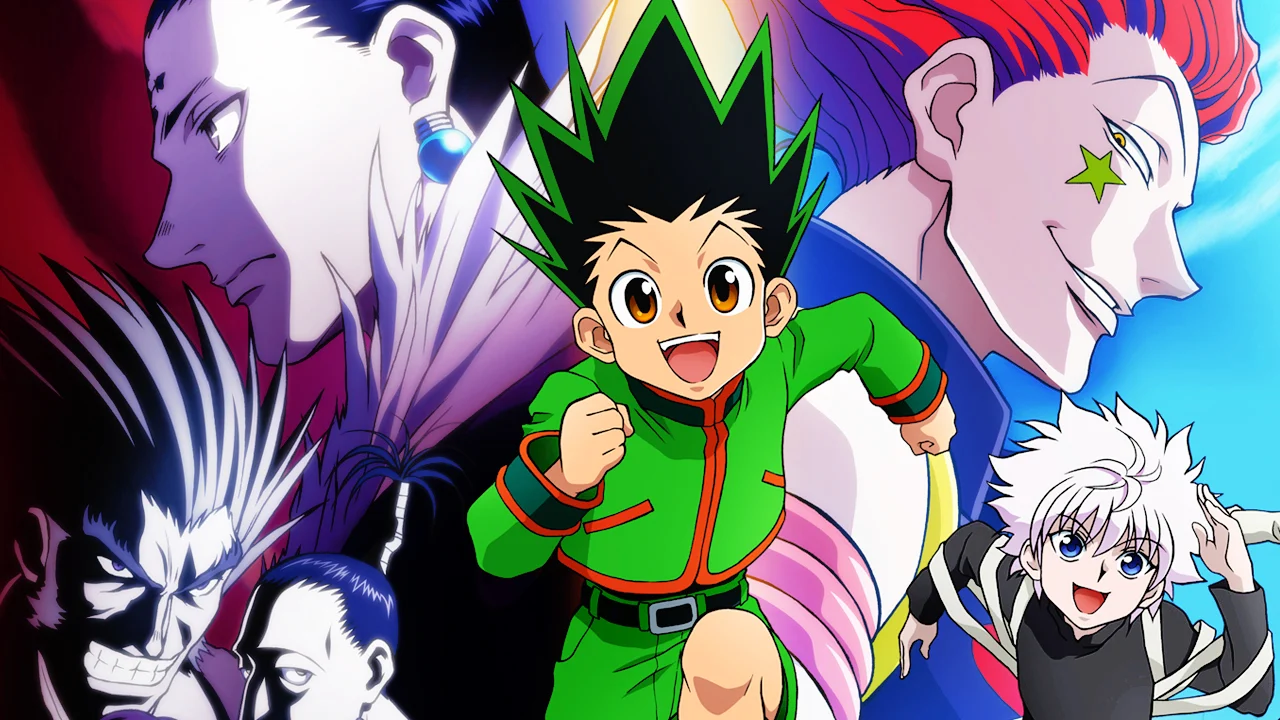
At first glance, Hunter x Hunter might seem like a typical shonen anime — adventure, fighting, friendship, and cool powers. But underneath the surface lies one of the most layered, thought-provoking, and emotionally mature narratives in anime. With creator Yoshihiro Togashi’s signature storytelling style, Hunter x Hunter dives into psychological, moral, and existential themes that elevate it far beyond the standard genre fare.
We’ve explored the series’ take on power, morality, and identity in previous deep dives. This time, the focus shifts to something that sits underneath all of it: how Hunter x Hunter treats childhood, the loss of innocence, and the steep price its characters pay for obsession and sacrifice.
A Quick Word on Power, Morality, and Identity
Before getting into the heart of this piece, it’s worth briefly acknowledging three themes that run throughout the series, since they set up everything that follows. Hunter x Hunter constantly questions what power actually means beyond raw strength, refuses to draw a clean line between good and evil, and treats every major character’s journey as a search for identity rather than just a path to becoming stronger. These ideas have already been explored at length elsewhere — what matters here is that they form the backdrop against which the show’s treatment of childhood and sacrifice becomes so devastating.
Why These Themes Matter as Context
Gon’s raw talent, Killua’s conditioning, and Meruem’s evolution all exist within a story that refuses to treat strength as an unambiguous good. That refusal is exactly what makes it possible for Togashi to later show power being acquired at the cost of someone’s childhood, rather than as a straightforward reward for it.
Setting Up the Real Subject of This Piece
With that foundation in place, two threads stand out as especially underexplored compared to how often they come up in fan discussion: how mercilessly the series treats childhood, and how consistently it punishes obsession. Both deserve a much closer look.

Childhood and the Loss of Innocence
While the main characters begin as children, Hunter x Hunter refuses to sugarcoat their experiences. The show explores how trauma, violence, and responsibility strip away innocence far too early.
Gon’s transformation in the Chimera Ant Arc is a visual and emotional metaphor for the death of childhood ideals. Killua, trained from birth to kill, slowly reclaims his right to be a child — but it’s a painful journey. The Hunter Exam itself is brutal, a test of survival masked as a rite of passage.
Togashi doesn’t romanticize youth — he highlights its fragility, and the cost of growing up in a harsh world.
Killua’s Childhood Was Stolen Before the Story Even Begins
Unlike Gon, whose innocence erodes gradually over the course of the series, Killua never really gets to have a childhood in the first place. By the time fans meet him at twelve years old, he has already been isolated from other children, denied normal relationships, and conditioned by his brother Illumi to feel satisfaction only through killing. According to one widely cited fan analysis of his arc, the contrast between Killua with Gon and Killua without him is stark — alone, he reads as a cold, lifeless killer, but in Gon’s presence, something closer to an actual child re-emerges, as explored in this character analysis of Killua’s journey. That contrast is precisely why Killua’s arc reads less like “growing up” and more like a slow, painful process of getting permission to be young in the first place.
Gon’s Innocence Was Always a Countdown, Not a Constant
Gon’s case works almost in reverse. He starts the series radiating the kind of boundless, almost naive optimism typical of a shonen protagonist, but the story treats that optimism less as a fixed trait and more as something with a shelf life. Every traumatic event he absorbs — Kurapika’s deception, the helplessness he feels watching Killua nearly die, and eventually Kite’s death — chips away at that initial innocence until the Chimera Ant arc finally breaks it for good. Togashi never frames this as a natural part of growing up; he frames it as a loss, something taken from Gon rather than something he simply outgrew.
Kite’s Death as the Moment Gon’s Childhood Actually Ends
If there’s a single event that marks the precise hinge point between Gon’s childhood and what comes after, it’s the death of Kite. Kite isn’t just another ally — he’s Gon’s closest living link to his father, Ging, and the closest thing Gon has had to a present, attentive male role model throughout the series. According to the Hunter x Hunter wiki, Kite was Ging’s own student before becoming a mentor figure to Gon and Killua during their investigation of the Chimera Ant threat, a relationship documented in detail on Hunterpedia’s page for Kite. His death at the hands of Neferpitou isn’t framed as a heroic sacrifice scored with swelling music — it’s abrupt, brutal, and immediately followed by the horror of his body being desecrated and reused as a training dummy. One detailed breakdown of the moment notes that Gon’s emotional unraveling intensifies once he’s confronted with Kite’s reanimated corpse, with his grief curdling into an obsessive need for vengeance rather than acceptance, as explored in this breakdown of Kite’s role and legacy. It’s worth noting that fan reaction to Kite’s eventual reincarnation as a Chimera Ant has been genuinely mixed — some longtime readers, as seen in fan commentary on the decision, feel that bringing him back ultimately softened what had been one of the story’s most unflinching statements about loss, since a death that can later be undone doesn’t carry quite the same finality.
The Hunter Exam as Childhood’s Last Safe Test
It’s easy to overlook just how violent the Hunter Exam is on a surface level, since it’s framed early in the series as a rite of passage rather than a trauma. But stripped of its adventure-story packaging, the exam is essentially a series of life-or-death trials that children as young as Gon and Killua are allowed — even encouraged — to enter. The fact that this is treated as a normal, almost celebrated milestone within the world of the series says a great deal about how little protection childhood is afforded in Togashi’s universe, long before the Chimera Ant arc makes that lack of protection explicit and brutal.

The Cost of Obsession and Sacrifice
Nearly every major character in Hunter x Hunter is driven by obsession.
Gon risks everything — even his own body — for revenge. Kurapika sacrifices his health, peace, and friendships for vengeance. Netero, a symbol of idealism, sacrifices his life in a brutal, morally complex battle.
The message is clear: ambition has a price. And while it may lead to greatness, it often leaves behind pain, loneliness, and regret.
Gon’s Sacrifice as the Series’ Bluntest Statement on Obsession
No single moment captures this theme more directly than Gon’s transformation against Neferpitou. According to one detailed breakdown of the moment, Gon effectively severs the emotional core that powers his Nen — his belief in connection, friendship, and being loved — in exchange for the strength to destroy what’s in front of him, a literal trade of his future self for a single act of vengeance, as described in this analysis of the scene’s emotional and narrative weight. What makes this so unsettling on a rewatch is how anticlimactic Togashi makes it: there’s no triumphant score, no slow-motion power-up shot — just a quiet, hollow transformation that plays more like grief than victory.
Kurapika’s Obsession Has No Finish Line
Kurapika’s arc illustrates a slightly different cost: obsession that doesn’t have a clean payoff, even when it succeeds. Every step he takes toward avenging the Kurta Clan pulls him further from the person he might otherwise have become, trading peace of mind, friendships, and even physical safety for a goal that, by its very nature, can never fully restore what was lost. Unlike Gon’s sacrifice, which has a single, visible breaking point, Kurapika’s cost accumulates quietly, chapter after chapter, which is arguably what makes his arc feel so exhausting to watch in the best possible way.
Netero’s Sacrifice as Obsession Wearing the Mask of Duty
Netero’s death reframes obsession in yet another light. On the surface, his final stand against Meruem looks like duty and self-sacrifice in service of humanity. But the sheer scale of his final technique — detonating a nuclear device implanted inside his own body — suggests something closer to a lifelong obsession with pushing human limits finally reaching its natural, devastating conclusion. Togashi doesn’t let any of his characters’ sacrifices, even the most heroic-looking ones, escape this same underlying cost.
Komugi’s Quiet Counterexample to Obsession’s Cost
Not every character in this arc pays the same price for devotion, and that contrast matters. Komugi has spent her entire life obsessively mastering a single, niche board game, Gungi, with no recognition, no power, and no audience beyond her own discipline. Unlike Gon, Kurapika, or Netero, her obsession never curdles into self-destruction — if anything, it’s the one thing in the story that produces something purely good, eventually reaching and humanizing the most dangerous being in the arc. Placing her quietly alongside Gon’s vengeance and Kurapika’s grief makes a subtle but important point: it isn’t obsession itself that the story condemns, but what that obsession is in service of, and what a person is willing to destroy in themselves to chase it.

Final Thoughts
Hunter x Hunter is a story that grows with you. On the surface, it’s an exciting anime full of unique battles, clever power systems, and unforgettable characters. But beneath that is a rich exploration of childhood, sacrifice, and the steep price that obsession demands from even its most well-intentioned characters.
It’s a show that respects its audience’s intelligence and emotions — one that doesn’t provide easy answers, but invites you to keep asking questions.
So if you ever wondered why Hunter x Hunter sticks with people long after the credits roll, now you know: it’s not just about Hunters. It’s about what gets left behind when childhood ends too soon, and what it really costs to want something badly enough to give up everything else for it.