
 Canada
 USA
USA Japan
Japan

Why Hunter x Hunter Is One of the Smartest Shonen Ever Written?

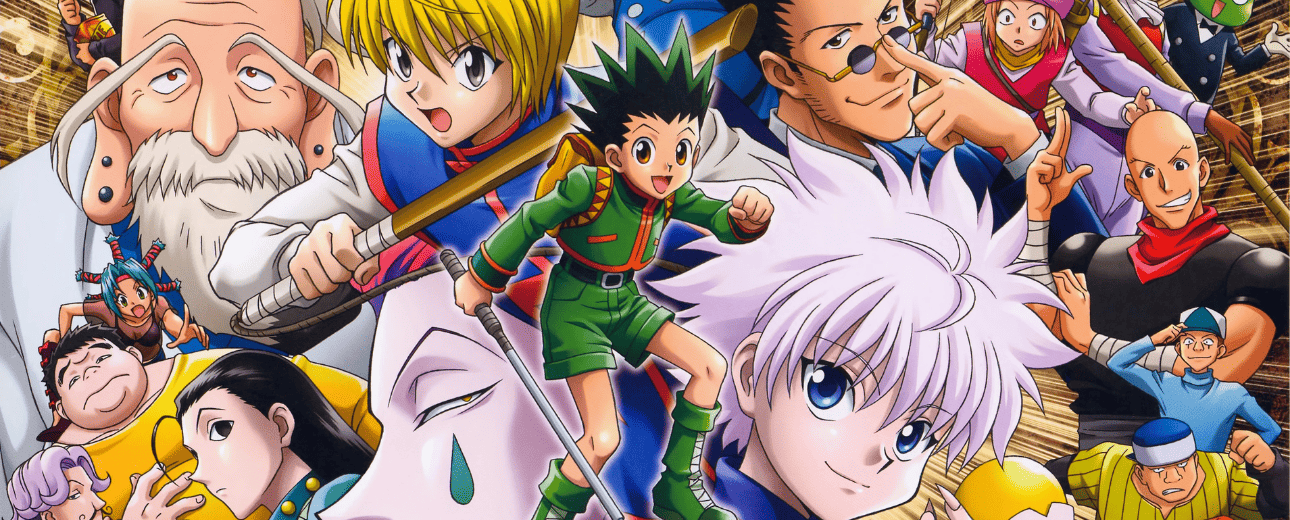
Since its debut in 1998, Hunter x Hunter has stood out as one of the most intelligent and thought-provoking shonen series ever created. Far from relying solely on flashy battles or predictable storylines, Yoshihiro Togashi’s masterpiece weaves deep psychology, moral ambiguity, and strategic complexity into every arc. This isn’t just a story about becoming stronger — it’s a story about understanding what strength really means, and that distinction is exactly what has kept the series relevant for over two decades. For official information, episode lists, and streaming access, visit Crunchyroll’s Hunter x Hunter page.
1. A Complex World Governed by Logic and Consequences
Most shonen worlds are driven by emotion and spectacle. Hunter x Hunter, however, stands apart for its realism and internal logic. Every decision, every power, and every event in Togashi’s universe follows a set of carefully constructed rules. The Nen system, the series’ unique power mechanic, is a perfect reflection of this. Rather than relying on raw power levels, Nen emphasizes creativity, intelligence, and risk. Characters who think strategically often triumph over those who simply fight harder, which makes nearly every major battle feel like a puzzle as much as a fight.
This logical foundation extends to the world-building itself. From the Hunter Exam to the Chimera Ant arc, every part of the story has a consistent internal logic — one that rewards the viewer for paying attention. Failure has real consequences, and even the strongest characters are vulnerable to their own weaknesses. Unlike many series where heroes always win, Hunter x Hunter constantly reminds us that victory often comes at a price. If you want to go deeper into what makes this series stand out among shonen anime, check out our detailed Hunter x Hunter analysis on Hunter x Hunter Merchandise.
Togashi’s universe operates almost like a living ecosystem. Power, morality, and consequence are all interconnected, forcing both characters and audiences to think critically about every situation. It’s this respect for intelligence — not just in the characters, but in the viewers — that makes the series so compelling.
The Nen System as a Framework for Fair Storytelling
What makes Nen so effective as a storytelling tool is how transparent and rule-bound it is. Once a character’s ability is revealed, fans can usually predict the logical boundaries of what that power can and cannot do. This consistency means Togashi rarely relies on convenient plot armor or last-minute power-ups; instead, victories come from clever application of established rules, which is part of why battles in Hunter x Hunter feel earned rather than arbitrary.
Consequences That Actually Matter
Unlike many long-running shonen series, Hunter x Hunter treats danger as genuinely threatening. Major characters get seriously injured, traumatized, or even killed, and these consequences shape the story going forward rather than being quietly forgotten. This willingness to let actions have lasting weight is a major reason longtime fans consider the series more mature than much of its genre.
2. Characters with Depth, Flaws, and Moral Ambiguity
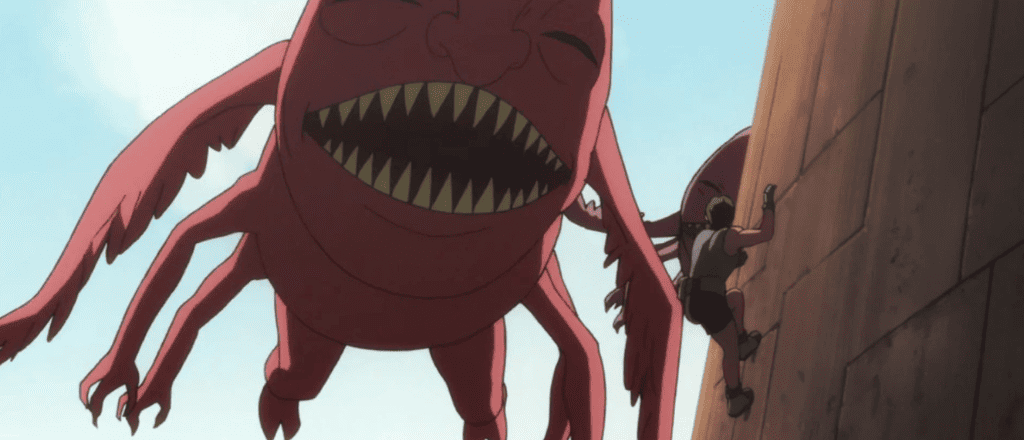
One of Hunter x Hunter’s greatest strengths lies in its characters. They are not defined by archetypes but by their decisions, motivations, and contradictions. Gon, the bright and optimistic protagonist, begins as a typical shonen hero but slowly transforms into something far more complex. His journey isn’t about defeating evil or saving the world — it’s about understanding his own nature. As the story progresses, Gon’s innocence becomes his greatest danger, pushing him toward moral extremes that few other shonen protagonists ever reach.
Killua, meanwhile, serves as his moral counterweight. Born into a family of assassins, his evolution from a killer without empathy to a loyal friend is one of the most emotionally grounded character arcs in anime. Their relationship forms the emotional and philosophical core of the series — two children navigating a brutal world with opposing understandings of what it means to be “good.”
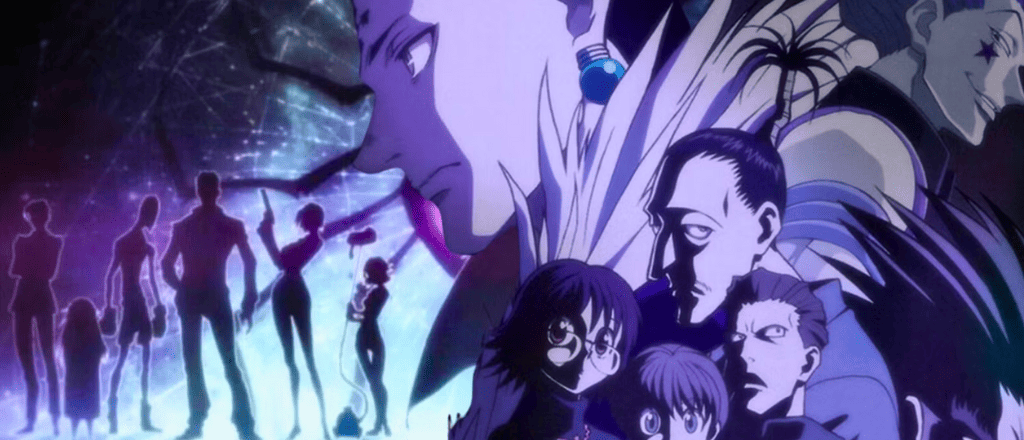
Even the antagonists in Hunter x Hunter defy easy classification. Characters like Hisoka, Meruem, and Chrollo Lucilfer are not simply villains; they are philosophical mirrors. Hisoka represents chaotic self-interest and fascination with strength. Meruem’s evolution from ruthless predator to introspective being questions the very definition of humanity. Chrollo embodies the tragedy of leadership and detachment. In this way, the story invites viewers to question morality itself — not as good versus evil, but as a spectrum of perspectives.
Gon and Killua as Philosophical Opposites
Part of what makes the Gon and Killua dynamic so compelling on a thematic level is how their worldviews originate from opposite extremes. Gon was raised with almost no exposure to cruelty, while Killua was raised with almost nothing else. Watching these two influence each other over the course of the series — Gon softening Killua, and Killua tempering Gon — gives their friendship a philosophical weight that goes far beyond typical shonen camaraderie.
Villains Who Force the Audience to Reflect
Hisoka, Meruem, and Chrollo each represent a different lens through which the series examines power and identity. Rather than existing purely to be defeated, they challenge the protagonists — and the audience — to reconsider easy assumptions about strength, morality, and what separates a hero from a villain. This refusal to rely on one-dimensional antagonists is one of the clearest signs of the series’ narrative maturity.
3. Intelligent Storytelling and Thematic Maturity
While Hunter x Hunter has all the elements of a great shonen — intense battles, emotional growth, and an expansive world — it uses them to explore deeper themes. The series constantly subverts expectations. The Hunter Exam arc, for example, isn’t about physical strength but about strategy, observation, and psychological resilience. The Chimera Ant arc, often considered the series’ masterpiece, turns traditional notions of heroism and villainy upside down.
Togashi’s storytelling is deeply philosophical, reflecting his view of humanity’s complexity. He doesn’t shy away from moral gray areas or existential questions. What defines a human? Is compassion stronger than instinct? What does it mean to pursue a goal without losing your sense of self? Every major arc in Hunter x Hunter introduces these questions and leaves them open for interpretation.
Moreover, the pacing and narrative structure reward patience and analysis. Every detail, no matter how small, often becomes meaningful later. Even the dialogue is crafted to challenge the audience — it’s dense, layered, and filled with double meanings. This literary quality elevates Hunter x Hunter beyond typical anime storytelling and into the realm of true art.
The Hunter Exam as a Study in Psychological Strategy
Rather than opening the series with a straightforward tournament of strength, Togashi uses the Hunter Exam to immediately establish that intelligence, patience, and adaptability matter more than physical power. Many of the exam’s most memorable challenges are won through observation and lateral thinking rather than combat, setting the tone for how the rest of the series rewards strategic minds over brute force.
The Chimera Ant Arc and the Question of Humanity
Widely regarded as the series’ high point, the Chimera Ant arc forces both characters and viewers to confront uncomfortable questions about what truly defines humanity. Meruem’s arc in particular stands out as one of anime’s most nuanced explorations of empathy, mortality, and growth, transforming a seemingly unstoppable threat into one of the most emotionally resonant figures in the entire series.
A Timeless Reflection on Power and Humanity
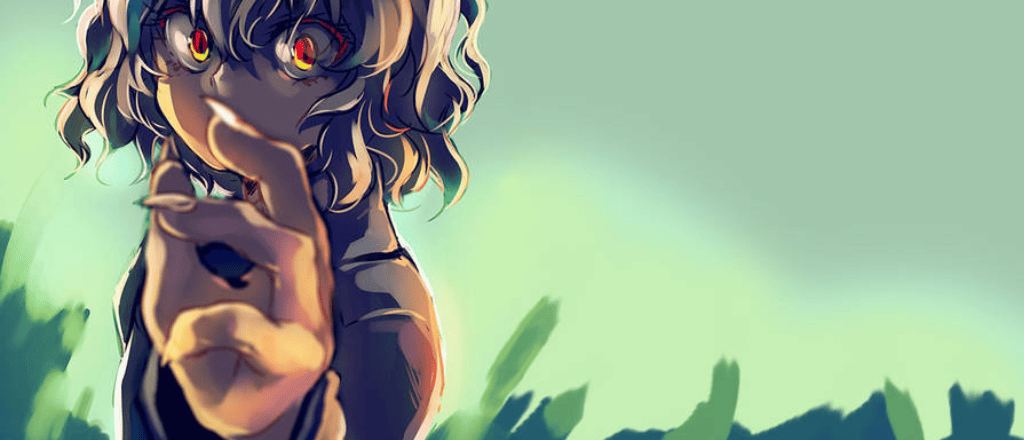
Hunter x Hunter’s brilliance lies in its balance between emotional storytelling and intellectual challenge. It dares to be uncomfortable, to show that strength isn’t just about defeating others, but about understanding oneself. Its battles are not just fights of power, but of ideas — where intelligence, psychology, and moral reasoning matter as much as raw might.
Decades after its creation, the series continues to inspire new generations of fans who appreciate its depth and sophistication. Few works in the shonen genre respect their audience’s intelligence as much as Togashi’s does. Hunter x Hunter doesn’t just entertain — it invites you to think.
Why Hunter x Hunter Still Resonates With New Audiences
Even years after its initial release, Hunter x Hunter continues to attract new fans through streaming platforms and word-of-mouth recommendations. Its willingness to tackle mature themes without losing its sense of adventure and heart is part of why it consistently appears on lists of the greatest shonen anime of all time, appealing equally to casual viewers and longtime anime critics.
The Lasting Legacy of Togashi’s Vision
Despite numerous hiatuses, Hunter x Hunter’s influence on the shonen genre remains undeniable. Its emphasis on internal logic, morally complex characters, and philosophical depth has inspired countless creators and set a high bar for what a shonen series can achieve. As long as fans continue revisiting its arcs and discovering new layers of meaning, Togashi’s masterpiece will remain a benchmark for intelligent storytelling in anime.
If Hunter x Hunter’s depth and complexity have left you even more attached to its world and characters, why not bring a piece of that universe into your everyday life? Explore our collection of Hunter x Hunter clothing, featuring designs inspired by Gon, Killua, and the rest of Togashi’s unforgettable cast — a perfect way for true fans to celebrate the series they love.